
Your inbox is no doubt full of messages about classes, assignments and countless other tasks. Scammers know that, and they sometimes send fake emails that appear to be from organizations you trust. Some of these scams specifically target students who they know are juggling busy lives and hectic schedules. Knowing what to watch for can help you protect your personal information and your ATI account.
What is an imposter scam?
According to the Federal Trade Commission (FTC), an imposter scam happens when someone poses as a business, agency, or person you trust so they can get your money, access to your accounts, or your personal information. These messages can arrive as an email, text, phone call, or social media message. One common version looks like it comes from a business you know and claims there is a problem with your account
Red flags in a fake message attributed to ATI
Every scam is a little different, but many share the same warning signs. Watch for these:
- A demand for money. A message that says you owe a fine, fee or penalty to clear up an account or exam problem should make you stop and verify.
- Payment through a middleman. Be wary of any instruction to send money to an outside company that will supposedly pass it along.
- A ticking clock. Deadlines measured in hours, or warnings that things will get worse if you do not act right now, are pressure tactics.
- An official look. Legal-sounding titles, case numbers, and formal language are easy to fake. So are personal details. The FTC notes that scammers may already know things like your name or home address, so a message that mentions you by name does not prove it is real.
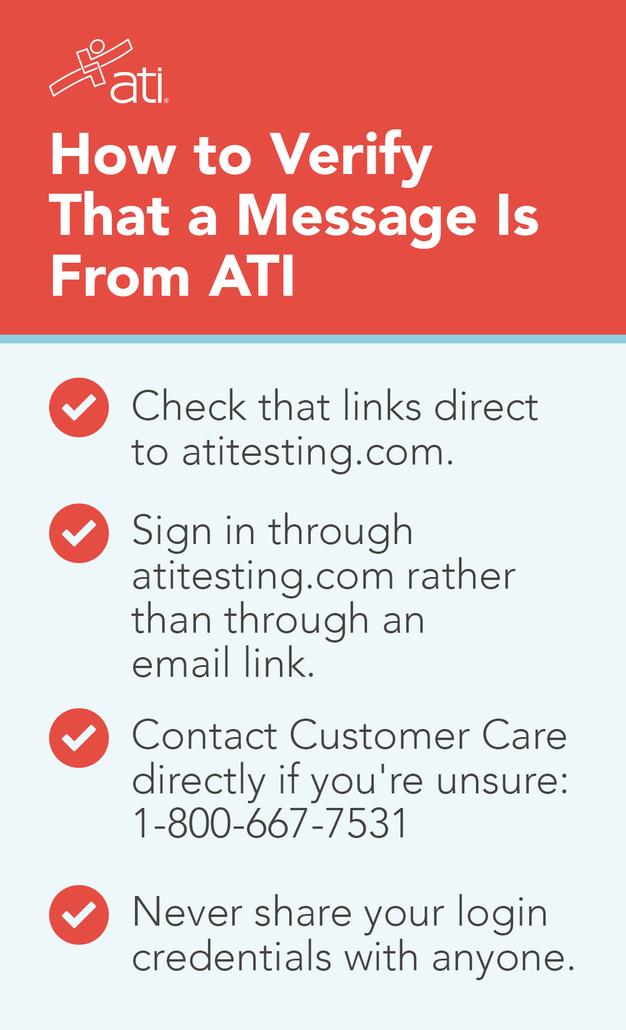
- A sender address that is slightly off. The display name might contain the real organization’s name, but check the full email address. A lookalike domain can differ from the real one by just a word or a few characters. ATI emails will always come from @atitesting.com or ascendlearning@service-now.com.
- Hard-to-trace payment methods. Gift cards, cryptocurrency, and wire transfers are favorites with scammers because the money is difficult to track and recover.
- Requests for your login or a written statement. Be suspicious of any message asking for your password, a signed explanation or apology, or proof that you paid someone.
What if you already responded or paid?
First, take a breath. Scammers are good at what they do, and this happens to smart, careful people. Here is what the FTC recommends:
- If you paid: Contact your bank, card issuer or payment app right away and they can advise you on next steps. If you shared your ATI password: Change it immediately.
- If you shared personal information: Visit IdentityTheft.gov for steps matched to what was shared.
- Watch for “recovery” offers: Someone who contacts you out of the blue offering to get your money back is likely running a second scam.
- Let us know: Reach out to ATI Customer Care so we can help you secure your account.
Help protect your classmates
Scammers rarely stop at one person. Share this post with your cohort and report anything suspicious. The more students who know the warning signs, the less power these scams will have.
You have worked hard to get where you are. Keep your account, your money, and your information safe. If you have questions about a possible scam impacting your ATI account, reach out to ATI Customer Care at 1-800-667-7531 or chat with us at atitesting.com.
References
ATI. Why cheating on the ATI TEAS (or any nursing exam) can derail your career. ATI Nursing Blog. Nov. 4, 2024. https://atinursingblog.com/cheating-on-nursing-exams-career-impact/
Federal Trade Commission. Business impersonator scams. Consumer Advice. https://consumer.ftc.gov/features/pass-it-on/impersonator-scams/business-impersonator-scams
Federal Trade Commission. FAQs. ReportFraud.ftc.gov. https://reportfraud.ftc.gov/faq
Federal Trade Commission. How to avoid a government impersonation scam. Consumer Advice. https://consumer.ftc.gov/articles/how-avoid-government-impersonation-scam
Federal Trade Commission. How to avoid imposter scams. Consumer Advice. https://consumer.ftc.gov/features/how-avoid-imposter-scams
Federal Trade Commission. What to do if you were scammed. Consumer Advice. https://consumer.ftc.gov/articles/what-do-if-you-were-scammed